
Why we should become aware of our biases

Do you know “Little Uncle,” Pippi Longstocking’s horse? Pippi, that red-haired girl blessed with superpowers, self-confidence, and a big heart? Pippi is one of the superheroes of my childhood. Why? She doesn’t fit into any typical mold for a girl (category 1: vulnerable, shy, etc.) with red hair and freckles (categories 2/3: looks “different” = strange), a difficult-to-remember name (category 4: Why can’t she have a name like everyone else?), a horse and a monkey as housemates (category 5: exotic), and, mind you, superpowers (a category that probably still needs to be invented). She breaks with stereotypes and, through her lifestyle (which we still call “unconventional” today), makes unconscious biases visible. And that’s just as true today as it was almost 80 years ago when the book was first published!
So what exactly are these unconscious biases or distortions? And if you’re now wondering whether you have them too, the clear answer is: YES!!! They’re part of being human. Because they make life easier: quick assessment, quick categorization, and on we go. In English, the term is “bias.” This word also exists in German, but it tends to be rather underused. So what exactly is a B-I-A-S?
Definition
The Anglicism “bias” means in German something like partiality, inclination, or prejudice. Wikipedia defines it as “…systematic errors in perception, memory, thinking, and judgment. They usually remain unconscious and are based on… prejudices.”
Cognitive biases are therefore factors that influence our daily decisions in many ways. These factors and their significance in our lives usually remain unconscious. In a business context, they are also consciously used, for example, in marketing. In other areas, unexamined biases, for example, in applicant selection or in everyday leadership, can lead to discriminatory decisions, a poor corporate culture, and even violations of regulations.
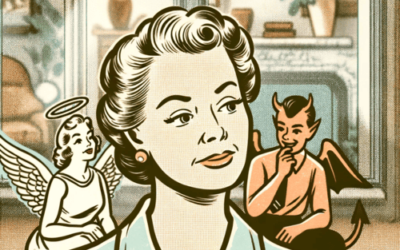
Unconscious biases stem from our innate desire to protect ourselves. Since the dawn of humanity, it has been crucial for survival to make split-second decisions: Am I safe with this person? How will they react to me? How will we communicate? The subconscious mind makes lightning-fast decisions based on pre-selected information, life experience, and assumptions. While this can be helpful in the short term, it can be detrimental in the long run, especially when unexamined assumptions literally get in the way of our interactions with others.
When you make a decision, you probably assume that you are acting completely impartially and rationally. Especially in decision-making situations, we want to see ourselves in a positive light. Perhaps you think: Things like prejudices and biases, sweeping judgments of people and situations – that’s something other people do, but certainly not me, an educated, reflective person? Stereotyping is frowned upon, yet we encounter it every day, and it even significantly influences our lives.
Let’s look at some examples:
- The confirmation bias
This bias refers to the human tendency to prefer and consider as significant information that aligns with one’s own beliefs. This is because we want to feel validated in our opinions, as well as in our memories. As a result, we are more likely to confirm existing hypotheses than to question them based on contradictory data.
- The IKEA effect
When you invest your own time and energy into a product, you tend to value it more positively. The furniture retailer that gave its name to this effect in behavioral economics has capitalized on this principle par excellence. Personal involvement in the creation of an object increases its perceived value. This effect also comes into play when consumers can partially customize an item.
- The bandwagon effect
Many people are guided by role models in their decisions. Even when making purchasing decisions, people quickly become followers, choosing the product that many others have also bought. This cognitive bias affects decisions ranging from purchases and voting behavior to strong group dynamics that may even condone rule violations.
As you might suspect, the list of different biases is much, much longer. At this point, I’d also like to mention the effect with the rather fitting name, the “curse of knowledge.” Studies have shown that the more knowledge one acquires about a topic, the more it can impair the ability to predict how much knowledge others have about that same topic. This phenomenon can have negative consequences not only in academic or school settings, but also in companies and organizations.
So what can I do to become aware of my unconscious biases?
First, consider when biases are most likely to have an effect, e.g., …
- … in the process of gathering and evaluating ideas for concept development
- … in developing the content for a presentation
- … in the selection of job applicants and the development of employees.
At their core, prejudices do serve a purpose. However, it’s only when we’re unaware of them that we become their unwitting victims.
Start with yourself and acknowledge your own prejudices by being honest with yourself and examining your decision-making processes. Seeking an outside perspective from a trusted person can also be helpful.
In the group, you should state your intentions out loud to make them conscious to your subconscious and to make decision-making more transparent. Ultimately, it’s also important to understand that unconscious biases are a part of life. They shouldn’t be discussed in a negative light.
„Until you make the unconscious conscious, it will direct your life and you will call it fate..“
(Carl Gustav Jung, 1875-1961, Swiss psychiatrist and founder of analytical psychology)
© Your Julia Bach
P.S.: If you enjoyed this post, please share it on LinkedIn or via email… or leave a comment right here.
You might also be interested in the following posts:
Establishing a Compliance Management System
- What exactly is this thing called compliance…?
- Compliance culture: More than just a “must”
- Speak up – What do I do if my gut feeling tells me that something is wrong?
- Unpleasant, but true: Without training, every guideline is worthless
Developing Compliance Officers and Responsibles

thanks